|
The Importance of Keeping Your Word by Frank Kermit It can happen sometimes where you make a promise that you did not realize you would not be able to keep. We are human beings, and when that happens, it can be embarrassing.
The cost of this kind of immature action is: The Loss Of Your Credibility
Quality people do not have time in their lives for people that lack credibility.
If you want to be a Good Person then start by being Good at keeping your word. If you don't want someone to label you, be sure you aren't acting in a way that makes then need to in the first place.
0 Comments
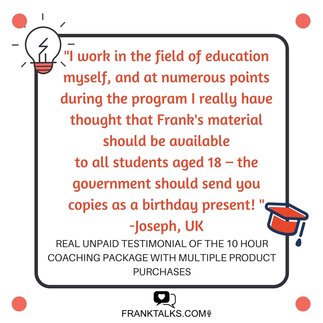
 Oh the Guilt! - Sex and the City by Pillow Talk Girl Oh The Guilt...Sex and the City Season 6 Written by: Pillow Talk Gal It’s one of the most challenging things any mother (single or not) has to learn to cope with: How to balance motherhood/family life and a career. For nine months we go through pregnancy, coping with our ever changing bodies, preparing for the day when baby will arrive. We setup the room; making sure we have every detail taken care of (baby clothes, toys, strollers, car seats, etc...). Before you know it the day has arrived and you are happier than you ever thought possible. You bring your new bundle of joy home and you learn what being a mom entails (little to no sleep, what seems like endless diaper changes and cleaning clothes, bottles and other baby related paraphernalia). Eventually you get the hang of the whole baby thing (schedule and otherwise) and you’ve hit your stride. You have it all together. You feel like you have this baby thing under control and you are the super hero of moms (at the very least a side kick). Then the day you’ve been dreading more than the labour pains, hits. You have to go back to your job. Suddenly, you have to trade in your mom card and go back to being ‘’professional’’ you. You hand in your diaper genie and get an upgrade to a briefcase. It feels weird, unnatural and somehow all wrong! In season 6 of Sex and the City (episode 6- Hop, Skip and a Jump) Miranda is facing just such a challenge. She has been back to work for a little while now and has acquired help from her trusted house keeper, Magda, to look after her infant son Brady. One morning, Miranda is running late for work when Magda arrives at the apartment to start her day. As all working mothers must do, Miranda relinquishes care of Brady to the help and sets off on her day to work. As she is leaving, Brady begins to howl at seeing his mama leave his sight. Although she knows she loves her job, Miranda is riddled with guilt at leaving her baby boy. None the less, she sets of on her long day of work. Later that day, Miranda is summoned to a meeting (for which she believes involves a case she has been working tirelessly on for her law firm). She arrives in a bit of a rush and immediately begins to give the partners of the firm her assessment of how her case is going. They quickly interrupt her, informing her that the meeting is with regards to her work performance and not her cases. They mention that they have noticed her missing time, being late for meetings and leaving early on certain occasions. Miranda, being the ultimate professional she is, makes no excuses for herself and states that those issues will no longer be a problem. She also takes the time to mention (you know, casually in passing) that as a lawyer, her performance has been unflawed but as a mother she felt like a failure. She gracefully leaves the room, and takes the time to remind the partners that when her mother passed, she happened to be at work the following Monday (only having missed 1 day). That evening, Miranda rushes home in the hopes of being able to spend some quality time with Brady. As she arrives home, she proclaims ‘’I’m here, I’m here!’’ to Magda, but to her disappointment Miranda discovers that Brady has been in bed for the past hour. She is so disappointed not only to find out that she missed spending time with her son, but also at herself. She feels like a failure as a parent! Why is it so difficult being a working mother? It’s such a struggle to be successful at both. The more time we spend being good at one, the more time we end up feeling like a failure at the other. Is there a happy medium? The business world places so much emphasis on being successful at our careers and there is so much pressure to perform. On the other hand, choosing to spend time and invest in our children is seen as slacking off. When a working mom needs to leave work because their child is sick, it is often met with scorn and disapproval (from colleagues and superiors a like). If there happens to be an occasion where a mother needs a day off to attend an event for their child, they are often either denied this opportunity, or are forced to lie about the reasons they need the day off (for example ‘’my car broke down’’, ‘’I was robbed’’, you get the idea). The business world invests millions of dollars everyday into a multitude of business ventures, so how is it they don’t put the same value on investing into children, who essentially are our future leaders. Why does society shun stay at home moms instead of praising them for raising well rounded kids? It would be nice to have an equal balance of both worlds (family and career) so that working women could avoid the feeling of failure all together and just feel fulfilled, all the while enjoying success both in and outside of the family unit. About Pillow Talk Gal Born and raised in British Columbia, she is a professional woman managing a career, marriage, and a teenager. Life can be challenging at times but she's a firm believer that everything in life happens for a reason, and more often than not, she tries to understand those reasons. "Join me in my journey throughout life’s issues and I guarantee you’ll be left pondering an issue or two." - Pillow Talk Gal To read Pillow Talk Gal's last post, click HERE *Disclaimer: Sex and the City was produced by HBO and all rights, titles and interests in any images or clips, used herein under Fair Use and Fair Copying, remain the property of the author. P.S. Do you Agree With This Article? Disagree? Have something to Add? Write your thoughts in the comments below and share this article to see how many of your friends think like you.  Sign Up For Frank Coaching Now Read one mans true unpaid testimonial of how 10 hours of coaching with Frank Kermit, combined with a few product purchases changed his life for the better.
To summarize my experience in working with Frank on his ten hours coaching program; Most pickup coaches give you a game-plan for the night; Frank is not a pickup coach, so he gives you a game plan for life. A big thanks to Frank for the work that we did - I found the program to be an absolutely fantastic investment of time, money and effort. It'll be with me for life. Looking back it also made me think of all of the work Frank must have put in over many years to acquire this much understanding and course material. It's incredible. I'll certainly be emailing Frank in the future to let him know how things are going, and whether or not I need to do any more coaching. I’ve studied pick up and relationship material for a few years and applied it, but very quickly I reached a plateau. Sure I learned how to pick up girls better than before but that brings in as many problems as it solves. How do you manage women? How do you break up with women? How do you keep them as friends with benefits? How do you turn them into your girlfriend? Frank has better answers than any coach I’ve seen. I was particularly interested to hear his perspectives on non-monogamous relationships and their management, as I’ve always believed there was another way for me than the traditional roles of being either ‘single’ and commitment free, or in a totally monogamous relationship. Even pick-up teachers with very solid material don’t seem to go into non-monogamous relationship advice – typically they advocate being single and having experiences forever – but this gets lonely. Frank’s material is on a much higher level altogether than anything else I’ve seen out there – And honestly I’ve read enormous amounts of other people’s material. That's not to say that there isn't other good stuff out there but Frank has a profound, detailed knowledge of dating and relationships. He goes into areas often neglected by others such as the best locations for dates and the best locations to actually meet single women who are looking to meet guys. These sound like obvious points, but they once you have the skills, these are the kind of questions that need addressing. More importantly though is Frank’s ‘Hierarchy of Relationships’ and ‘Emotional Needs Analysis of Men and Women. ’ They are immediately usable tools to manage, screen and maintain your relationships in a way that is healthy for both men and women. The coaching and product purchases were a reasonable investment for me, but those modules alone were worth the cost! I’ve quite literally never encountered anything that gives you the perspective of these two tools. The ‘Hierarchy of Relationships’ in particular gives you the framework to manage all relationships.
I worked hard and really committed to the assignments. I’m glad I did, as it really allowed me to make the most of the sessions and I got a huge amount out of them. Frank doesn’t mince his words in the sessions – he gives you direct and often challenging perspectives. I can’t count the number of times I came away from the sessions feeling like I just understood something about relationships, women, or myself in a new, deeper light. Frank’s not a flashy teacher with a luxury office space. He coaches by telephone or Skype. He doesn’t seem to have any outward features that would make this stuff come easily to him. In fact if anything, outwardly you’d probably never guess at the depth of wisdom and experience he has in dating, and all types of relationships, including non-monogamous ones. The program exercises were unorthodox to say the least but they make sense if you do them properly. Frank’s depth of knowledge is staggering, even to someone who has read a lot before discovering Frank’s material. Frank’s original theories are innovative and incredibly helpful –they are a true masterpiece of insight for relationships. I really hope this knowledge spreads to as much of the world as possible as people can only benefit from it. After 10 hours of coaching, I now have a ton of material to go over. Before I began coaching with Frank I was going around in circles despite putting effort in. Now the course is set! I have my compass, and map in hand, and all I have to do is to keep going forward on my journey. I have no hesitation in recommending Frank to anyone who is looking to get greater fulfillment in relationships. In fact, I would say that if you are not working with Frank or reading his material, you're missing out. Even guys who already know how to meet women could really learn a ton from him - in fact I think that for more advanced guys - Frank is the only coach out there who can actually help you to progress further in whatever direction you want to go in. -Joseph, United Kingdom  The Benefits of Coaching with Frank Kermit  Sign Up For Pre Marriage Coaching to Divorce Proof Your Relationship The Wedding Toast Speech By Frank Kermit Remember this day, your wedding day. Not for the parties, not for the extravagance, nor the dinner and dancing, but remember this day, your wedding day because of the reasons you chose to marry your spouse. Remember who is it that you picked to marry on this day, and why you picked this person over all other choices available. Remember the reasons why you chose to get married and how it fits in with your plans, life goals and why you decided that the person that you wanted as your spouse was a reflection of everything you felt is important to you enough that you wanted to make him or her part of your family. Remember this day, your wedding day That the ritual of the wedding is more than just a celebration of your new union. It is to mark the change in your lives as individual "I"'s to a unified sign of a "we". As a "we", you call on all those people closest to you both to witness and be a part of your togetherness, in the hopes that not only will they be celebrating your endeavor; they will also be employed in the ongoing support of your new and future family. Remember this day, their Wedding Day To you: the wedding guests, please know and remember that your role in being present, is more than the gifts you offer, your toasting their happiness, and your boost to start the new couple in their new life together. Your role as participants in a wedding audience is that you have also accepted a role in the ongoing support of the new couple to help keep this new family together through the hardships and triumphs that life can and will force upon us. For better or for worse, isn't just a saying. It is a reminder. Life gets very real when you have someone else to care for and think about. If and when you are blessed with children, the realness of every decision you both make is even more intense; Remember this day, your wedding day, as you both pledge to do your best to suffer them together, and support each other, even when either of you happen be at your worst. Remember this day, your wedding day Because you BOTH Will Make Mistakes There will be times you both will make mistakes, when you both will etch an emotional scar, when you will have to deal with financial worries, mental health concerns, new limits on your physical abilities, accidents, the challenges of well meaning people who love you, who interfere more than help you, having to move and change with the times, and in the death and passing of people close to you. Remember This Day, Your Wedding Day, As you both pass into the next stage of your lifespan, up to and even past the point of being present for the possible weddings of your own children and grand children. Remember this day, your wedding day, Remember every reason you had to make the commitment to start this journey together, knowing that life together would NOT be easy but that you still wanted to go through with it. Remember this day, your wedding day because it was the event you chose to create. Remember the love that brought you together, the willingness to stand together, and the drive behind making your intent to build a future together a public decree. When either of you are overwhelmed by life, and it is likely to happen more often than not over the course of your lives together, remember this day, your wedding day to remind you why you chose to make it happen. Remember this day, your wedding day, to help you build and create a better future for the two of you, through each and every new day you decide to stay together and honor the promise as best you can everyday. So, Remember this day, your wedding day, when some days are better, when some days are worse, and take it one day at a time. -Frank Kermit  Sign Up for Frank Coaching NOW and Divorce Proof Your Marriage Learn how to pick a wedding theme in this contributed post. There are blue skies above, which means that wedding season is about to hit the ground running. If you’re planning a wedding in the coming months, you may be thinking about whether to have a themed celebration or not. Wedding themes appeal to some couples, but you don’t have to have a theme for your big day. If you do like the idea, here are some tips to help you choose the perfect theme for your wedding. Seasonal themes The seasons play an important role when it comes to choosing a theme, and many couples take inspiration from the weather, the surroundings, and the time of year. If you’re getting married in the holidays, for example, winter wonderland and Christmas themes are always a big hit. If it’s summer, and you’re having a beach wedding, something more tropical and exotic may appeal. If it’s fall, you may choose to use the colors of the leaves for your table decorations, or you may go for golds, rich reds or burgundy shades for your bridesmaid dresses, for example. 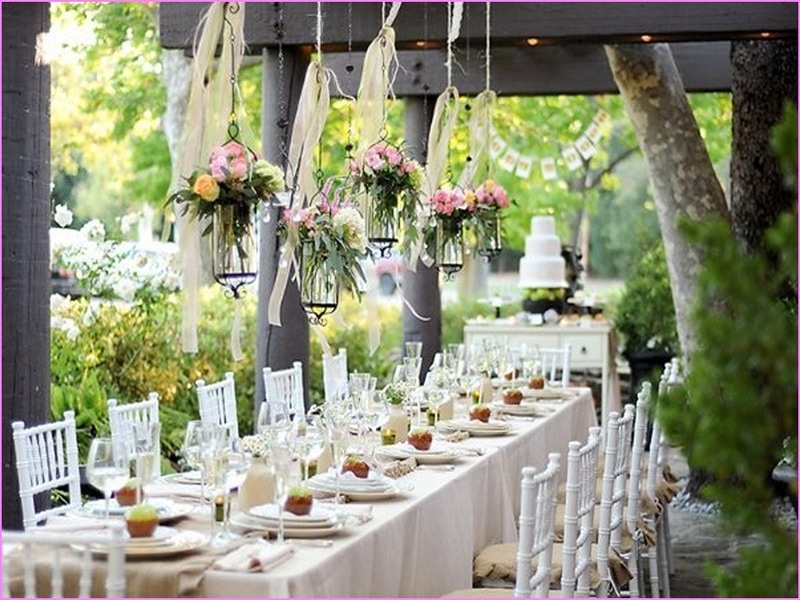 wedding planner https://tinyurl.com/lwpxdxk Heritage and culture Many people like to celebrate their heritage when it comes to planning a wedding. This could be reflected in the addition of dragons to the table centerpieces or choosing the color red for an invitation for a Chinese wedding or in the outfits you choose to wear for a Scottish celebration. If you’re marrying somebody from a different culture, using your heritage is a theme is a great way to bring everyone together and create a day that involves both sides of the family. On-trend themes If you’re getting married soon, you’re probably aware of what’s hot and what’s not in the world of wedding themes. Like fashion catwalks, trends change every year, and there is always a collection of ideas, which seems to reflect what everyone wants. A couple of years ago, vintage fayres and shabby chic were all the rage, and this year, al fresco gatherings are stealing the show. Informal ceremonies are becoming increasingly popular, and more and more people are shunning the traditional wedding breakfast in favor of more sociable and less formal options like barbecues, buffets, and grazing platters. 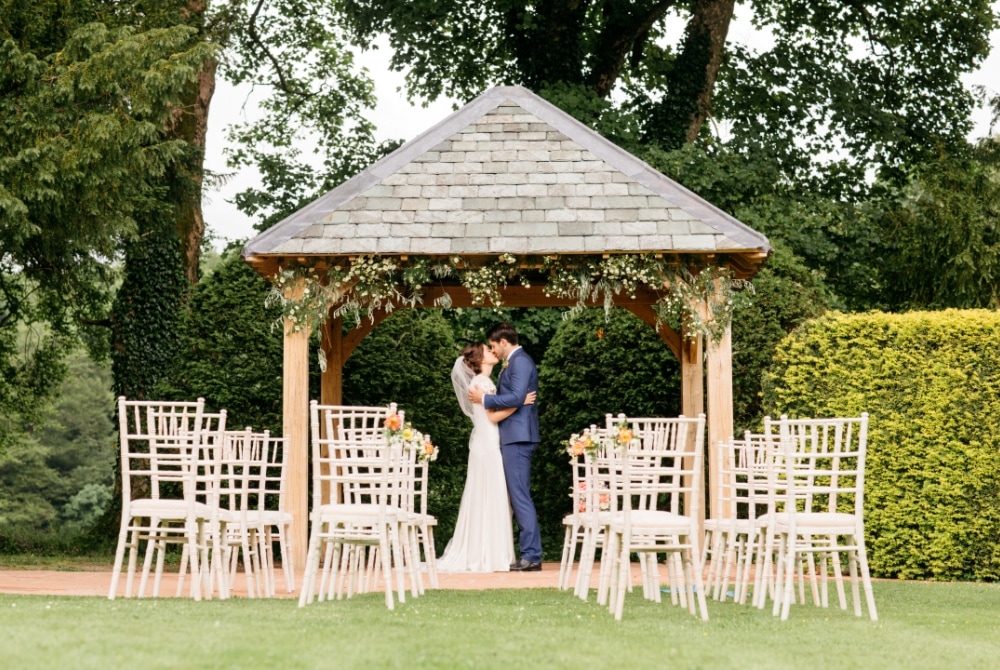 romantic wedding vows https://tinyurl.com/mstbbwa Passions
It’s common for couples to use their passions and interests as a source of inspiration when it comes to planning a wedding. Perhaps you’ve traveled the world together, and your table names are named after your favorite places. Maybe you love jazz, and you’ve gone for a retro Hollywood theme with live music. Or maybe you’re massive fans of Star Wars, Harry Potter or Game of Thrones and you’ve asked everyone to dress up for your big day. If you do have a shared passion, this is an excellent way of personalizing your ceremony and making it memorable. If you’re in the middle of planning a wedding and you’re considering potential themes, think about what interests you, and what kind of event you want to create. Celebrate what makes you special, be creative, and plan a day that’s unique and personal. 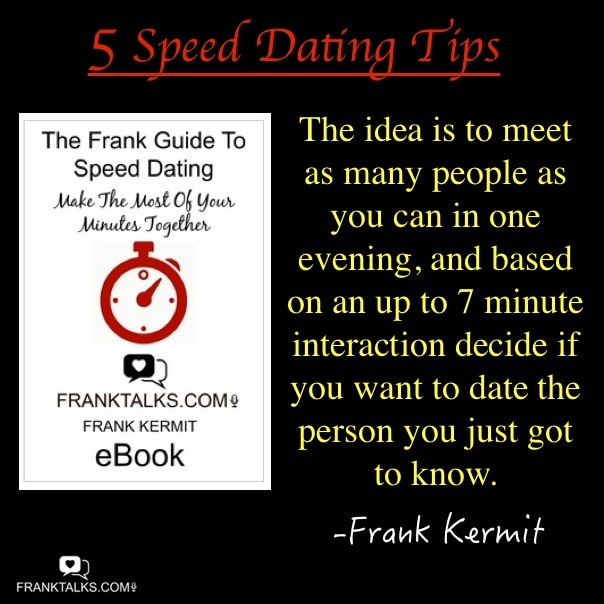 A Frank Guide To Speed Dating Frank Guide to Speed Dating By Frank Kermit Every way to meet someone new is a good way. Though friends, through the Internet, blind dates, approaching someone you want to meet, at a workshop, matchmaking services, business conventions...if you want to meet new people, there is no bad way to do it. One of my personal favorite ways is Speed Dating. Speed Dating is when they take a group of people, try to evenly have the same number of men and women, and while the women sit in the same seat all night, every 5-7 minutes a new man sits down and they have a quick date.
I love Speed Dating, and even met one of the best girlfriends of my life through a speed-dating event. Here are some tips if you are eager to try it out for yourself.
One thing to be prepare for is that sometimes the entertainment can be very un-calibrated and make their entire shtick about how horrible relationships are, or joke about worst dating experiences. If you are going to organize a Speed Dating event yourself, make sure to get someone that can be entertaining, inspiring and someone who loves dating and relationships and who will encourage all the participants to have fun. If you are attending a speed dating event, keep in mind that the entertainment simply may not be up to par, and do not let it affect your mood that night. (One of the worst speed dating events I ever went too was my very first one. Hosting the evening was a single author of relationship books, and all she did was remind everyone about their own personal relationship horror stories by being negative about her past dating life the entire routine. All that did was put many of the participants in an uneasy spirit. That speed dating company no longer exists by the way.)
Go in with the mindset that everyone you meet is date-able, and that you will only mark someone as a -No thank you- if they do something that is a blatant sign you would not want to date them. I have often seen the same people attend multiple Speed Dating events, and decide on the third or fourth meeting to say Yes to dating and end up enjoying their time together. If they had been more open-minded they could have dated right after the first meeting at the first speed-dating event.
Plants are people that are not actually interested in meeting anyone new; the plants are just there to fill up a seat and even out the numbers. They could be already involved in a serious relationship (usually with someone organizing the Speed Dating event) or a friend of a friend that was called in on a favor, to help out the organizers to fill seats. Since these people having nothing invested in the evening (including not having paid to participate), they have less pressure and end up having more fun in the speed date conversations. This has led many actual participants interested in dating the plants, and mistakenly holding out from saying, Yes to other participants who were actually emotionally available. This is why you say Yes to as many people as possible, so that you do not get sidetracked by an attractive plant that never had any interest in being a potential partner for you.
but it does not tell you how this person is going to treat you in a relationships nor does it reveal if you would be able to get along long term. I often suggest questions that explore a person's soul such as: What would you do if you won one million dollars? The answer to a question like this will reveal what a person's priorities, values, and interests are, and you will be able to better judge whether or not this is a person you can potentially find love with.
This is no time for head games. Part of the reason it is important to reach out and connect with someone, is that some people immediate start to seriously date the first person they meet up with from a Speed Dating event regardless of how many matches they get, and when a second match contacts them, the second match gets turned away for no other reason than they were too slow to act. Always be the first. If you ever happen to attend a Speed Dating event that I am hosting, please do say hello. -Frank Kermit  If you liked the article, check out the book it was based on P.S. Do you Agree With This Article? Disagree? Have something to Add? Write your thoughts in the comments below and share this article to see how many of your friends think like you.  Sign Up For Frank Coaching Now 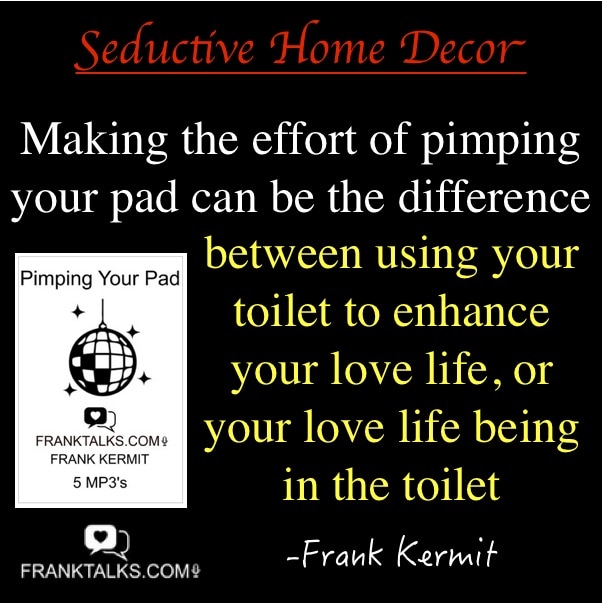 5 Tips To Make Your Home More Seductive - Pimp Your Pad Your Home is Your Seduction By Frank Kermit Your date is coming over to your place! You have seen each other a couple of times already, but this is different. This is YOUR PLACE, not some coffee shop or movie theatre or restaurant. This is home field advantage. And why not? After all, there is no cover charge, you do not have to share a public washroom with strangers, you can put your feet up, a meal is way cheaper, and you can even prepare the meal together as part of the fun! What could possibly go wrong? Well, depending on how you live at home...plenty could go wrong, and even though you might be able to keep your date intrigued enough, your place could be a turn off in ways you might not know.
However, there are pitfalls. If your home is not a warm and receptive environment that makes visitors feel invited to overstay their welcome, you could inadvertently be pushing away your hearts desire.
On occasion, I make coaching house calls for people that seek out to create an alluring seductive homestead to help them attract sexual partners and/or relationship candidates. Some people may require an objective eye to help them spot those idiosyncrasies that the proprietor may be oblivious too.
Here are some general guidelines
If you only bring out certain candles when a date arrives, or put a particular bottle in the fridge, or move your furniture around to create an ideal setting, it is best to always have those candles out, your bottles in the fridge and your furniture in the ideal settings at all times. The energy levels you will take on your date that you saved from a massive cleaning will be well reserved to help create an outstanding evening.
A bathroom that creeps out a person will have a very different effect than one with appropriate artwork (see above), scented candles already lit, a fresh shower curtain and a sparkling toilet. If you want to have a spectacular love life at your home, and you do not have the time or the inclination to clean the bathroom, hire a cleaner to come over for a couple of hours each week to scrub it down. It is worth the investment.
The key factor is that those toiletries stay at your place after your lover leaves in the morning, and it encourages your over night guests to want to come over again, especially when they know they already have their own toiletries there Making the effort of pimping your pad can be the difference between using your toilet to enhance your love life, or your love life being in the toilet. Frank Kermit  If you liked this article, check out the program it was based on P.S. Do you Agree With This Article? Disagree? Have something to Add? Write your thoughts in the comments below and share this article to see how many of your friends think like you.  Sign up for Frank Coaching Right Now!  Ready, Set, Panic! - Sex and the City - Pillow Talk Gal Sex and the City: Season 2- Ready, set.......PANIC!!! Written by: Pillow Talk Gal Has this ever happened to you...Your thoughts are racing, your heart is pounding and then that dreaded feeling that you’re going to pass out begins. You feel like everything around you is closing in and there’s nothing you can do to stop it. What’s happening? Well, chances are you’re having a panic attack. It’s scary (especially the first time) and it happens to so many people, yet it’s something not spoken of, due to its stigmatic nature. In season 2 of Sex and the City, episode 5 – Four women and a Funeral, Miranda has decided to make the jump and buy her own place. She is financially independent and feels ready to take the next step. Being a 35 year old, successful woman buying her own apartment alone (without the financial help of a man) seems to be a concept lost on many of the people around her (her realtor, the mortgage broker, associates at her law firm).
As she visits the vacant apartment to measure for drapes, she meets one of her soon to be neighbours who mentions that the previous owner was an unmarried, lonely old lady, who died and was found a week later, having had her face eaten off by her cat!
Finally in a last ditch effort to save her own life, she gives herself the Heimlich manoeuvre on the back of an unpacked moving box and to her relief, she is able to dislodge the trapped Kung Pao chicken. After she has caught her breath, Miranda immediately calls Carrie to inform her of her near death experience, luckily Carrie is able to talk her off the ledge (so to speak) and calm her down. When asked if she needs company, Miranda puts on a brave face and shrugs off the experience (with the exception of making sure her cat’s food bowl is completely full with food, you know, as a precaution of course).
Then out of nowhere, things start to feel very wrong. Her vision starts to blur, the buildings and everything around her begin to spin and she feels as though she is going to pass out. Luckily, a cab happens to be a few feet away (this is New York City after all), so she summons the strength to hail it over and immediately tells the driver to take her to the nearest hospital. $500 worth of tests later, doctors tell Miranda she has had a panic attack. Even though Miranda was trying to be strong, the stress from the possibility of living and dying alone became too much for her to handle.
In today’s society we are all finding our own way of dealing with the stress factor in our lives. There are so many issues now a days (divorce, politics, terrorism, bad economical times, etc...) that for many it has become almost impossible to not worry, a daily ritual if you will (in waking thoughts or as you put your head to pillow at night). As I write this I can’t help but wonder,
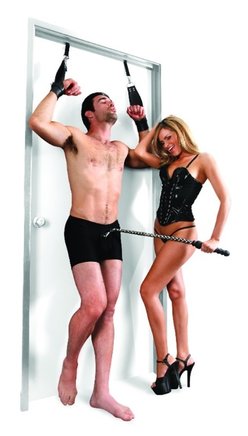
Mental health issues have definitely gotten more attention in the last few years, but it’s important that we all remember that the next time you see someone struggling, instead of brushing them off, be compassionate and think twice before judging. Everyone has ‘’something’’ and we can never really understand how they are handling it. About Pillow Talk Gal Born and raised in British Columbia, she is a professional woman managing a career, marriage, and a teenager. Life can be challenging at times but she's a firm believer that everything in life happens for a reason, and more often than not, she tries to understand those reasons. "Join me in my journey throughout life’s issues and I guarantee you’ll be left pondering an issue or two." - Pillow Talk Gal To read Pillow Talk Gal's last post, click HERE *Disclaimer: Sex and the City was produced by HBO and all rights, titles and interests in any images or clips, used herein under Fair Use and Fair Copying, remain the property of the author. P.S. Do you Agree With This Article? Disagree? Have something to Add? Write your thoughts in the comments below and share this article to see how many of your friends think like you.  Donate Here for Mental Health and Panic Support  The Stigma and Struggles of Humiliation Kink Humiliation Kink by AnnaBel Joseph Humiliation is one of those hot button kinks that no one seems to feel equivocal about. Most kinky romance readers either love it or hate it. I know I used humiliation pretty liberally in some of my books. (see the titles of Comfort Object, Mercy, and Club Mephisto) In writing this post, I wanted to get the input of someone who really loved the kink of humiliation in order to give everyone the most positive view of the loving, smexy side of this fetish. I asked my friend "Baby Firefly" for an interview since I think she's a real expert on the emotional side of this topic. I hope you enjoy her wonderful responses!
Erotic humiliation is where one derives sexual arousal, pleasure, or what have you, from being demeaned or degraded by another person. As I see it, this particular fetish is largely psychological in nature, and because of the potential for emotional harm, I would definitely classify it as edge play. This fetish widely varies from person to person. For instance, being called names like slut or whore can be humiliating and even damaging to one person, but another may take no issue with it. The key is for the dom to have good insight to the sub’s psyche. I think humiliation works best between players who know each other very well.
Annabel: Oh man, that's pretty hot. Have you ever had communication problems with your partner regarding humiliation? For instance, expressing what was okay and what was not okay, or how far to take things? Baby Firefly: We’ve been together for nine years now and know each other really well. For us, communication has been crucial in making it work. Before we moved forward with the edgier side of humiliation, we had a long discussion about where the boundaries were for me and for him. After a really intense and degrading scene, we talk about it. The sexual component is only half of it. Processing the emotions it brings up is part of the aftercare. Sometimes I need that, and other times I don’t. The bonus is that not only does it bring us closer, but talking about it always makes for hot conversation.
I do think there is a stigma attached to it, but then there is with most BDSM practices outside of those who live it. I used to be very closed lipped about it even among my friends in the community. It turns out that the hang-up was mine. Funny how that works. I’ve come to embrace it. The wonderful thing about kinky people is how open and accepting they are about sexuality. Now, it’s not something I’d go telling the girls in my book club. I don’t think I’d be invited back after that.
A Slut Goes to the Store Sounds like the first line of a joke right? So not a joke. This weekend I was treated to taste of mild public humiliation. My owner wrote SLUT on my calf in huge letters in black marker. Not so bad right? That's what I thought until he sent me to the corner store at 5:30 PM on a Friday. The mindgame of it all was that it was written in washable marker. I could have very easily wiped it off before I went in to make my purchase. But at what cost? I don't particularly like being caned, so as much as I hated it, as humiliated as I was, the word had to stay.
I ended up pretending that it wasn't there. Yes, I reverted back to my typical coping mechanism. I slipped it on like a skin, remembering how it felt all those years ago in high school. Cold. Frozen. Above. I still heard a few whispers. I felt the stares of the guys who stood behind me buying their twelve pack of Busch Lite on their way home from work. I heard them, but would I ever let that show? Not me. I smiled at myself on the drive home, proud that I'd endured this little humiliation. But the ice crumbled when I saw my owner. He knows how I work. He can see through the layers of ice. The humiliation came crashing down on me full force as he asked me to tell him every little detail.
Many many thanks to Baby Firefly for agreeing to shed light on this often misunderstood form of kinky play, and for sharing such a thoughtful, heartfelt journal entry. So, how do you all (the Franktalks.com/Blog readers) feel about humiliation in your BDSM romance? Like, dislike, depends on the situation? Have you ever read a scene in a book that was humiliating and yet hot? -Annabel Joseph http://annabeljoseph.com/ The Following are two interviews that Frank Kermit and Annabel Joseph participated in
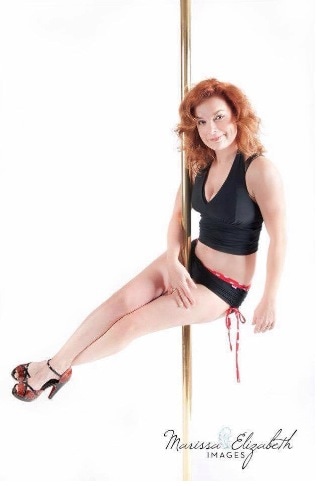
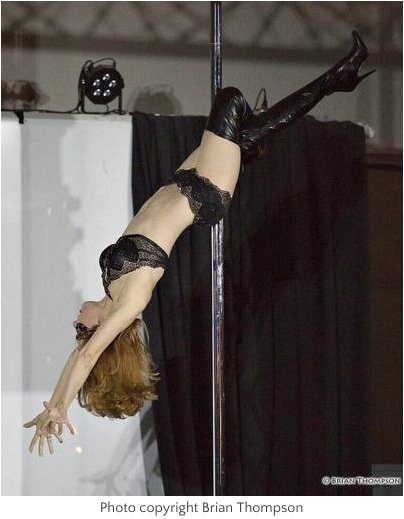
P.S. Do you Agree With This Article? Disagree? Have something to Add? Write your thoughts in the comments below and share this article to see how many of your friends think like you. 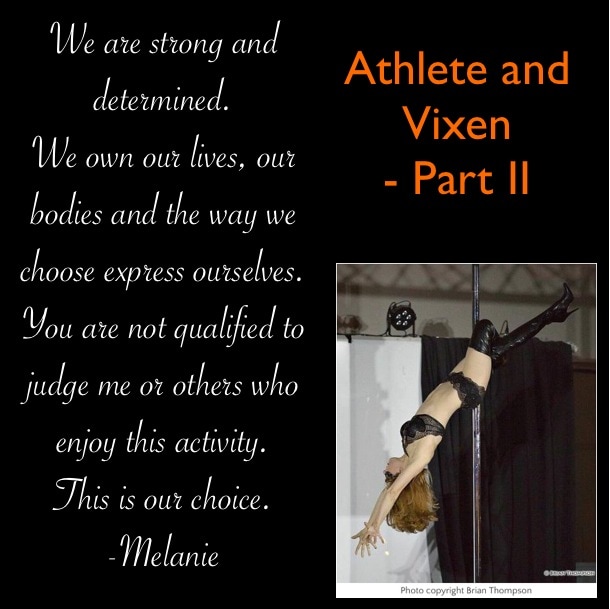 Athlete and Vixen: Making of a Pole Dancer - Part II Athlete and Vixen: Making of a Pole Dancer - Part II by Melanie Lynch I last posted about Pole dancing being a sport and that not all Pole dancers are strippers but I asked the question ‘what is so wrong with stripping anyway?’ When I started Pole dancing I found that I would get so frustrated with everyone implying I was a stripper. As years went by I started participating in more shows and met so many great women. They were all out there trying to be brave, showing up in small costumes and hoping they would put on a performance. Some of these fantastic women were almost naked and some were actually stripping. I marvelled at them and loved them for the courage on stage but quickly learned that although they were strong on stage backstage they were nervous balls of energy getting their courage up and trying to remember their routines. I discovered that there really was nothing different between them and me. So once again, let’s start at the beginning. When I started my Pole journey, I went to my first class and I was wearing full-length leggings and a tank top. To me this was revealing. As we progressed I needed to climb and so the leggings changed to shorts. I learned to hold the Pole between my legs (yes, I am aware of how that sounded) and the shorts got a lot smaller. Then the ultimate thing happened, I started to flip upside down and needed to position the Pole across my abdomen. So my tank tops needed to turn into a crop top or sports bra. Let me tell you, after you have had three children, your first instinct is not to show off the stomach area. As I stood there, I had to fight the urge to cover my stomach with my hands. But Pole is so much more than exercise. It’s a community. A loving, welcoming community that encourages women to not apologize for the way they look. These ladies push you to grow, express yourself and be bold! At the same time as I started attending Pole shows, I also started going to Burlesque shows. The first time I went to one, I was completely blown away. I had never seen anything like it. These women came out with the most amazing, decadent, creative costumes and performed with such sublime beauty that it took my breath away. They were stripping but the show was more than just removing their clothes, it was a celebration of beauty, whether it was the movement, the costumes or the woman themselves, it was simply beautiful. I had the privilege to watch one performer named Coco Framboise who came on stage wearing the massive fur boa which she slowly undressed behind. It was a cheeky tease because you would only see glimpses of her caramel skin behind the white softness of the fluffy boa. She was mesmerizing and the crowd absolutely loved her. There’s nothing like the crowds at these shows. The first thing you notice about these crowds is that they consist largely of women and these women scream, shout and catcall the performers in encouragement. They show their appreciation for what is happening on stage. I was drawn to try this too and so signed up for the Coco Framboise School of Burlesque. I wanted to learn how to exude that kind of confidence and beauty.
I once read one of those Facebook postcards that said something like “some women feel empowered by covering themselves while others by taking their clothes off, who are we to judge” and it spoke to me. There’s a lot of criticism about women taking their clothes off or objectifying themselves and I won’t go into all their arguments here. You can’t take two steps without running into their voices and you can go read about it yourselves. There’s something to me that just doesn’t fit about this mindset.
WE are strong and determined. We do not want to be told anything about ourselves anymore. We own our lives, our bodies and the way we choose express ourselves. You are not qualified to judge me or others who enjoy this activity. This is our choice. Why is it wrong to be us? We are not hurting you or ourselves. In fact we are having fun and life should be fun. Maybe no one will understand what we are trying to do and that’s ok but all I ask is that the judgment stop, and that you just sit back and enjoy the show since we have worked hard to pull it together! If you think I am crazy and wrong, well that’s ok too because I have a whole community of women that are there with me cheering me on and supporting me every step of the way and I really didn’t choose to do it for you anyway. To read Part 1 of this series, http://www.franktalks.com/blog/-athlete-and-vixen-the-making-of-a-pole-dancer
|
Categories
All
Archives
April 2024

ABOUT FRANKFrank Kermit NDG Encore Singing Chorus **** Every Friday Night 
Donate To The Tadpole Education Fund When You Want To THANK FRANK
TAKE CHARGE OF YOUR LIFE.
SIGN UP FOR COACHING NOW!
The Adult Male Virgin Program
LOSE YOUR VIRGINITY IN 90 DAYS!
YOU ARE NO LONGER A VIRGIN BUT YOU DON'T KNOW WHAT TO DO IN BED. GO FROM FORGOTTEN TO UNFORGETTABLE!
Coaching For Singles Looking For Love
BUILD YOUR CONFIDENCE!
BUY THE COACHING WORKBOOK FOR MEN TODAY!

THERE IS COACHING WORKBOOK FOR WOMEN. TAKE CHARGE OF YOUR LIFE TODAY!
BUY DATING AND RELATIONSHIP COACHING WITH FRANK KERMIT
DO YOU KNOW THE EMOTIONAL NEEDS OF WOMEN?
LEARN TO SPOT THE EMOTIONAL NEEDS OF WOMEN IN YOUR DAILY LIFE

DO YOU KNOW THE EMOTIONAL NEEDS OF MEN?

LEARN TO SPOT THE EMOTIONAL NEEDS OF MEN IN YOUR DAILY LIFE
Couples Coaching

AN EXPLORATION OF MONOGAMY & NON MONOGAMY LIFESTYLES
50 ARTICLES ON THE TOPICS OF LOVE, SEX, DATING AND RELATIONSHIPS
YOURS FREE WHEN YOU SIGN UP FOR THE E-NEWSLETTER
Coping With Loss Coaching
A FAST READ TO GET YOU OUT THERE AND DATING!
ONCE YOU GET THE DATE READ THIS TO KNOW WHAT TO SAY.

WHERE DO YOU GO ON YOUR DATES? READ THIS EASY GUIDE AND FIND SOMEWHERE NEW
MAKE A GREAT IMPRESSION WHEN YOU ARE SHORT ON TIME
Accountability Coach to help you reach your goals each day
STORYTELLING IS A SOCIAL SKILL YOU CAN LEARN.
A STEP BY STEP GUIDE TO BUILD AND MANAGE YOUR SOCIAL LIFE.
LEARN THE SOCIAL CUES YOU HAVE BEEN MISSING
LISTEN HOW TO DATE A YOUNGER WOMEN AND BEAT OUT YOUR YOUNGER MALE COMPETITION!
GET OUT OF THE FRIEND ZONE RIGHT NOW!
WHY IS SHE WITH A JERK?
IS SHE WORTH THE EFFORT YOU WANT TO MAKE TO STEAL HER FROM HIM?

FROM ALONE AND CONFUSED TO INTERNATIONAL RELATIONSHIP & DATING EXPERT
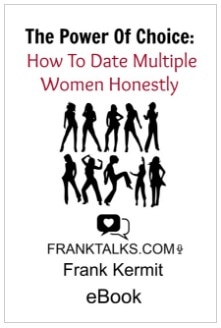
HOW TO USE EMOTIONAL NEEDS ANALYSIS TO MAKE MULTIPLE WOMEN FEEL UNIQUE AND SPECIAL IN AN HONEST WAY

LEARN THE ETHICS OF SEDUCTION FOR MEN AND WOMEN

FROM BORING BACHELOR PAD TO STYLISH AND SENSUAL. SIMPLE, EASY, STEPS TO TAKE TO TRANSFORM YOUR SPACE
HOW TO HAVE ALTERNATIVE RELATIONSHIPS IN AN NON-ALTERNATIVE SOCIETY

LEARN HOW TO BE SUCCESSFUL IN A MONOGAMOUS RELATIONSHIP
100 QUESTIONS THAT OTHERS WERE AFRAID TO ANSWER.
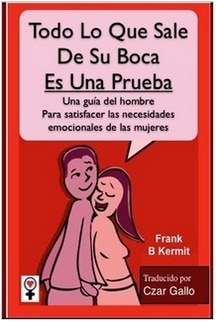
TODO LO QUE SALE DE SU BOCA ES UNA PRUEBA -EVERYTHING OUT OF HER MOUTH IS A TEST VERSION EN ESPAÑOL EBOOK
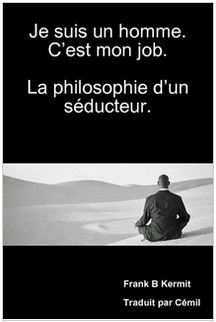
JE SUIS UN HOMME. C'EST MON JOB.- I'M A MAN THAT'S MY JOB VERSION FRANÇAISE EBOOK

PMC Media Production
Dr. Laurie Betito Quotes
|
















 RSS Feed



FRANK KERMIT MA
EXPERT RELATIONSHIP COACH HELPING PEOPLE CONNECT |

ALL COACHING IS BY TELEPHONE OR SKYPE ONLY INTERNATIONAL CLIENTS ARE WELCOME *INTERNATIONAL CLIENTS ARE RESPONSIBLE FOR LONG DISTANCE PHONE CHARGES, +1 Canada/USA* SKYPE IS PREFERRED. IT'S FREE AND EASY TO USE FROM ANYWHERE IN THE WORLD TELEPHONE: +1-514-680-3278 EMAIL: frank@franktalks.com SKYPE: frank kermit PLEASE NOTE THAT ALL SALES ARE FINAL. NO REFUNDS OR EXCHANGES
|